
For U.S. President Nixon, it was clear that the People’s Republic of China could not be excluded forever and the tense situation had to be improved. Chairman Mao also saw the Soviet Union as the main enemy and preferred to have the United States on his side rather than having to fight it as an adversary.
The motivations of Nixon and Mao
In the 1960s, a development arose in the United States among both Democrats and Republicans to move closer to the People’s Republic of China. Nixon wanted to use the tensions between Mao and the UDSSR to finally drive a wedge between the two countries and to isolate the Soviet Union. Furthermore, during his election campaign, the US president had promised to end the Vietnam War. For this he wanted the support of the Chinese. Further, of course, he saw China’s economic potential.
Mao was forced to pact with the Soviet Union at the beginning of his communist movement, because the Americans would never have made common cause with a communist at that time. However, his preference has probably always been the United States. Now the opportunity presented itself. This rapprochement also gave the Chairman the opportunity to put a shot across the Soviets’ bow. Further, the Taiwan issue was central to him and accordingly Mao was very interested in negotiating it. Finally, the possible abolition of trade blockades was also important.
Both leaders had to move out of their comfort zone for these rapprochements, had to make concessions and compromises. Both, however, believed that it was worth the risks, since no agreement would be by far the worse solution in the long run.
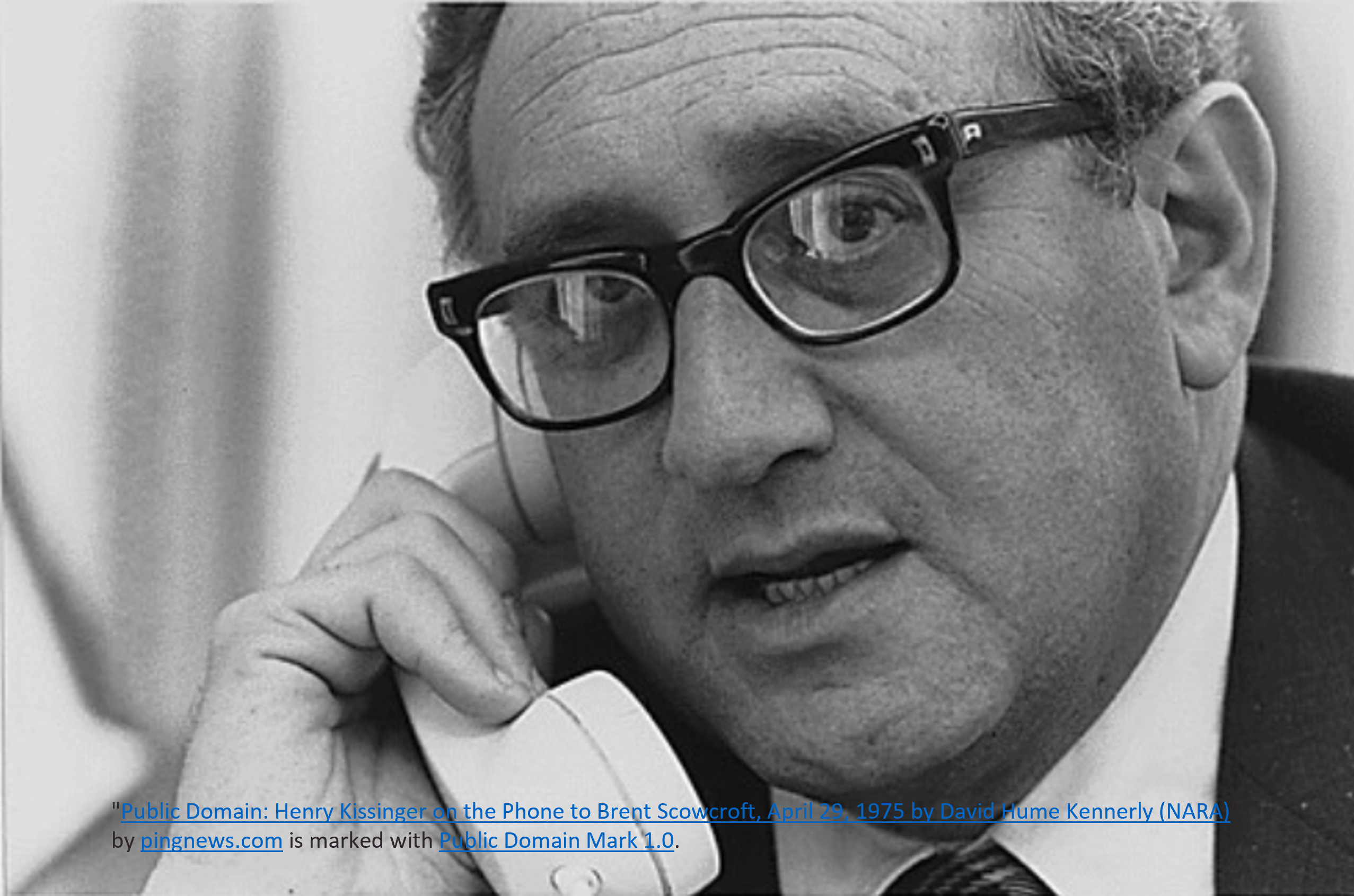
Nixon’s successful trip to China required three top-level meetings. The first two meetings were between Dr. Henry Kissinger and Zhou Enlai the Chinese Premier. To put the finishing touches on the communique that Nixon and Mao were to sign, Kissinger sent his deputy for a third meeting. Everything was to be in place before Nixon’s trip to Beijing. The actual meeting between Nixon, Mao and Zhou Enlai was then only a formality, at least in terms of content.
The road to the meeting between Nixon and Mao was rocky
In February 1969, Nixon sent a memo to his security advisor, Henry Kissinger, with the task of evaluating in great secrecy what possibilities there were to improve the relationship between the United States and the PRC, People’s Republic of China. The secrecy was important, Tricky Dicky knew that the Democrats and the Republicans would crucify him if they found out too early.
From that first step to meeting Mao Zedong took four years and overcoming multiple challenges. Completely different values and ideologies clashed. What made it even more difficult was the fact that great secrecy was necessary and that there were no direct diplomatic channels. Most of the communication was through the Pakistani President Yahya Khan. Furthermore, it was always possible that Chairman Mao’s fragile health could throw a spanner in the works. Farther, the U.S. bombardment of Cambodia, a friend of the PRC did not help either.
Nixon’s successful trip to China required three high-level meetings. The first two meetings took place between Dr. Henry Kissinger and Zhou Enlai, the Chinese Premier. To put the finishing touches on the communiqué that Nixon and Mao were to sign, Kissinger sent his deputy to a third meeting. Everything was supposed to be finalized before Nixon’s trip to Beijing. The actual meeting between Nixon, Mao, and Zhou Enlai was then at least in substance a mere formality.
What were the key success factors, and what was finally agreed upon in the “Shanghai Communiqué”? Read more about it in the next blog post: “The Week that Changed the World III/VI“
Other blog posts in this series:
“The Week that Changed the World I/VI”
“The Week that Changed the World IV/VI“
“The Week that Changed the World V/VI“
“The Week that Changed the World VI/VI“
Below you will find my English YouTube video on “The Week that Changed the World.”