
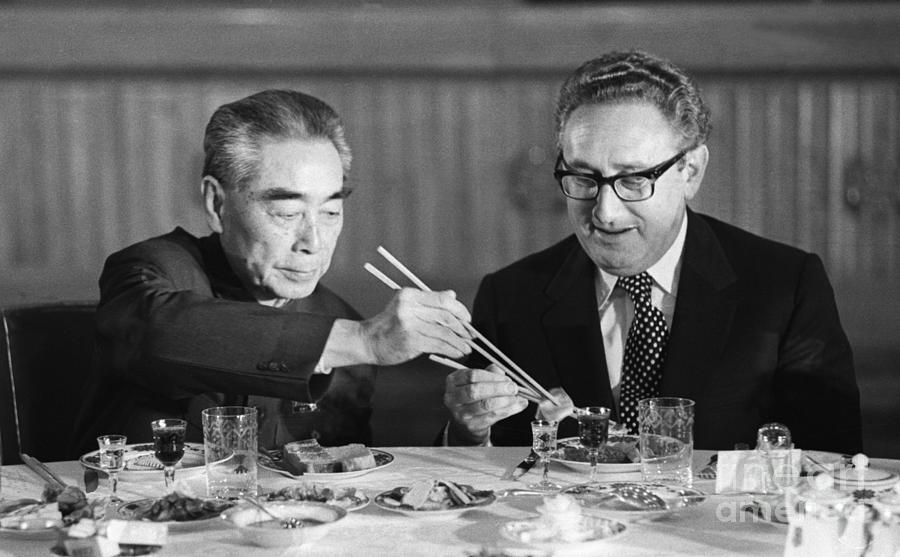
In the four years between Nixon’s directive to Kissinger to improve relations with the People’s Republic of China and the signing of the Shanghai Communiqué in 1972, there was a significant risk of failure. The main credit goes to Henry Kissinger and Premier Zhou Enlai. Their actions and behavior were crucial to the success.
The first meeting between Kissinger and Zhou was the most decisive.
The first meeting between the US national security advisor, Kissinger, and Premier Zhou Enlai took place in Beijing from July 9 to 11 and laid the groundwork for success. According to Kissinger, they spent 17 hours in conversation. The Chinese premier and longtime brilliant diplomat pulled out all the stops and created an atmosphere of warmth and trust. There was an open debate, and the two diplomats hit it off immediately. They managed to set aside ideologies and resentments and meet on equal terms. The younger and less experienced American diplomat was impressed with Zhou’s comprehensive knowledge of the United States and Zhou’s openness and candor. Quoting from Kissinger’s memo to Nixon, “Apart from Charles de Gaulle, Zhou Enlai is the most impressive statesman I have ever met in person.” The American statesman’s academic background and comprehensive historical knowledge probably helped win over the Chinese premier.
Key moments in the diplomatic dialogue between the two pioneers of rapprochement
At the meeting, the key points of a future agreement were defined. For the People’s Republic of China (PRC), the central element was the resolution of the Taiwan issue and the confirmation of the One China policy. Kissinger confirmed that the United States was ready to normalize relations with the PRC, but he also pointed out that this could not be the only topic of discussion. For the United States, the resolution of the Indochina issue was of the utmost priority, he said. The US wanted to withdraw its troops from Vietnam as face-saving as possible and needed China’s support in negotiating an agreement with North Vietnam. The Premier confirmed that he would do his best, but expressed doubts that the Americans would be able to leave Vietnam in a face-saving way. With that, the stakes were set, and the foundation was laid. In further discussions, the task was now to bring the endeavor to a successful conclusion.
Read about Nixon’s visit to China and what was agreed upon in my next blog article: “The Week that Changed the World IV/VI”
Other blog posts in this series:
“The Week that Changed the World I/VI“
“The Week that Changed the World II/VI.“
“The Week that Changed the World V/VI“
“The Week that Changed the World VI/VI“
Below you can find my English YouTube video about the week that changed the world.