
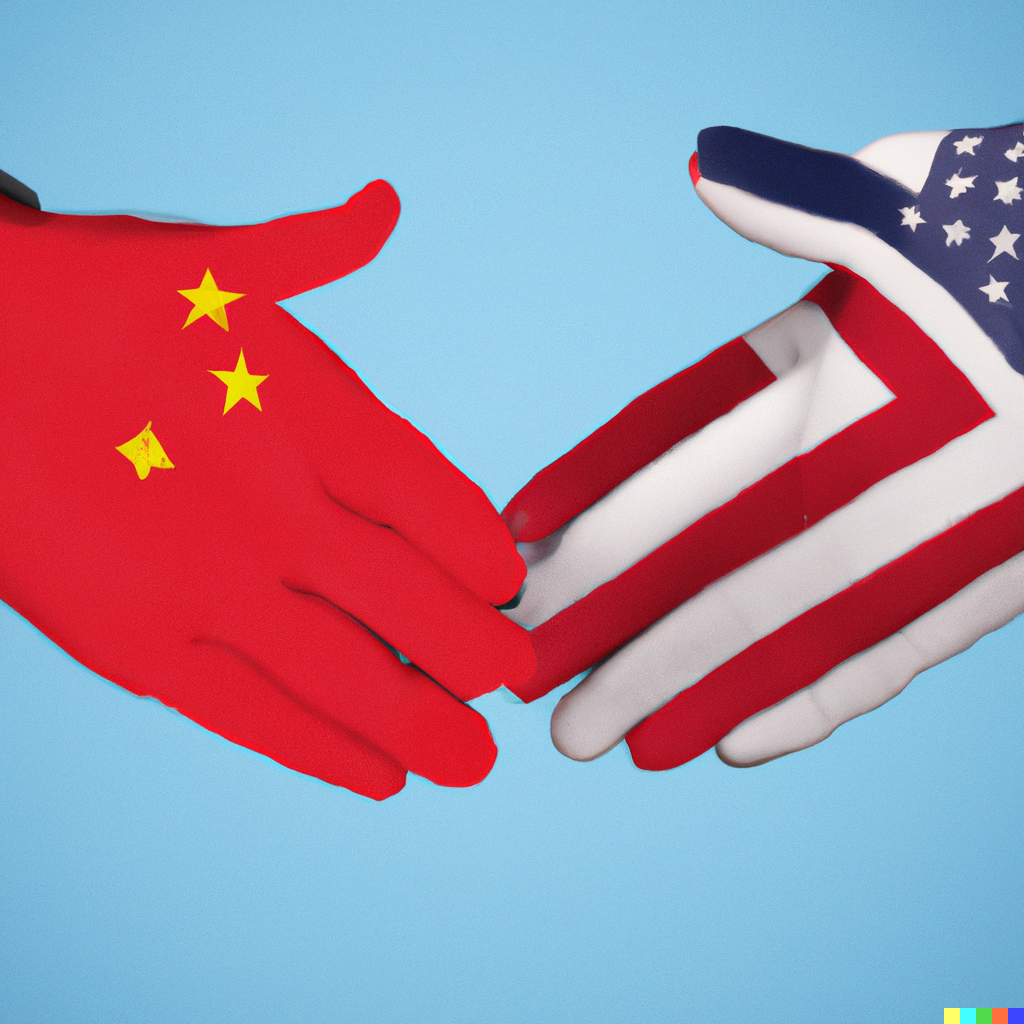
Especially with regard to potential solutions, we can and must draw parallels between the 1970s and the current US/China conflict. While the comparison may not be immediately intuitive, taking the time to explore it leads to important conclusions.
Parallels in terms of solutions
Mutual respect
Here, it is worth citing the opening remarks of US National Security Advisor Henry Kissinger during his first meeting with Premier Zhou Enlai: “Of course, we are aware that there are profound ideological differences between us. You stand for your concepts, we have our convictions for the future. The essential question for our relationship is whether both countries are prepared to let history determine who is right. In the meantime, we will deal together with matters of mutual interest on the basis of mutual respect and equality of all peoples.” This type of thinking is needed today as well.
Agreeing to disagree
In the Shanghai Communiqué, Chairman Mao proposed a solution acceptable to both sides. Each party presented its view on paper, followed by a third section containing statements that both sides could agree on. This approach should also be applied today. In his latest book, “The Avoidable War,” former Australian prime minister and longtime China expert Kevin Rudd offers a realistic solution that corresponds to this approach: defining red lines that cannot be crossed, determining areas where competition should occur, and finally listing topics where cooperation is possible.
Silent diplomacy
A key factor in the success of the Shanghai Communiqué was that everything was kept secret for a long time, and nothing leaked to the public, even excluding the US State Department. This must also be the approach for a new agreement between the United States and the People’s Republic of China, according to China expert Kevin Rudd.
The challenges of finding a viable path for coexistence are significant, but the risk of war is certainly not an option. Finding a solution was a greater challenge 50 years ago, but it was accomplished thanks to Henry Kissinger and Zhou Enlai. Perhaps talks behind closed doors are already underway. Let us hope so.
Other blog posts in this series:
“The Week that Changed the World I/VI“
“The Week that Changed the World II/VI.“
“The Week that Changed the World III/VI”
“The Week that Changed the World IV/VI“
“The Week that Changed the World V/VI“
Below you will find my English YouTube video on “The Week that Changed the World”